Thursday, December 30, 2010

Buy a home that's been vacant?

It may seem like a great deal, but be aware of possible expensive repairs lurking inside. 
By Patrick Doty, Editor Bellevue home Team Blog
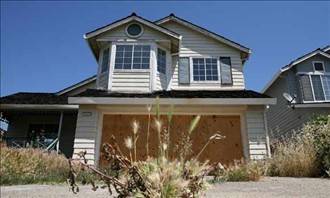
A for-sale house that's been vacant may look like a bargain, but buyers ought to be cautious, because expensive problems often lurk inside homes that have been unoccupied for some time.
A home can become vacant due to a wedding, job relocation, death or other life event. But vacancies today are more often due to a bank foreclosure or short sale in which the lender accepts less than the mortgage balance. It's these bank-owned properties — sometimes called "real estate-owned," or REOs — that tend to be "problem homes," says David Tamny, owner of Professional Property Inspection in Columbus, Ohio, & 2010 president of the American Society of Home Inspectors in Des Plaines, Ill.
Vacant homes can suffer from a wide range of ills due to neglect, deferred maintenance on the part of the earlier cash-strapped homeowner, & vandalism, Tamny explains. Broken water pipes, stolen copper wiring, damaged appliances & mold are but a few examples of the potential problems that may await buyers of these homes.
The risks for buyers are front & middle since the number & percentage of vacant for-sale homes has increased in the coursework of the housing slump. over 2.2 million for-sale houses in the U.S. were vacant in 2008, according to the U.S. Census Bureau. That figure was over double the 1 million vacant for-sale homes in 2000. Vacant homes exist throughout the country, but the percentage of vacancies in 2008 was higher than the national average in the South, Midwest West, & lower in the Northeast.

Turned-off utilities limit home inspection

Homebuyers usually hire a professional to conduct a visual inspection of the home  prepare a document on its condition. That's a wise precaution, but not even a well-qualified & thorough home inspector can see inside walls. Nor can an inspector evaluate the condition of a home's plumbing, electrical wiring, heating-and-cooling process or major appliances if the water, gas or electricity has been shut off.
"Buyers often don't understand that if there is no electricity, they are going to receive a very limited inspection," Tamny says. "You could end up with lots of surprises in the event you don't have those systems turned on prior to the inspection."
Swimming pools, which naturally are more common in such states as California, Indiana, Nevada & Florida — where foreclosure rates have been high -- are also a special concern if a home has been vacant. Some inspectors won't include a pool as part of a basic inspection. Others will include the pool, but again, it may be impossible for the inspector to check out the equipment if the utilities have been shut off.
"You probably will must accept the pool (as-is because) it's unlikely that you'll be able to get the whole thing up & jogging  for the purpose of an inspection then shut it back down," Tamny says. "You could have thousands of dollars in repairs."

As-is home purchase can be risky

Some banks have procedures in place that allow potential buyers to turn on the utilities, but the buyer may be necessary to pay a deposit to the utility company & put his or her own name on the account, even though he or he doesn't own the vacant home. That inconvenience may prompt some buyers to forgo parts of the home inspection that can't be performed unless the utilities are on.
That can be dicy, because unanticipated repairs can cost thousands or even tens of thousands of dollars, & the buyer usually will have no recourse with the bank. That means the buyer will be stuck with whatever problems the house has.
"Buyers are drawn to a house because it's discounted from what it sold for a lot of years ago & they are hoping to receive a bargain. they don't always understand that sometimes the problems make up the dissimilarity between the cost of the house what they are getting for a discount," Tamny says.

Vacancy may affect homeowners insurance

Home buyers also ought to know that insurance companies may decline to issue a homeowners insurance policy owner until the agent looks at the vacant home, says Dick Luedke, a spokesman at State Farm in Bloomington, unwell. The agent's once-over isn't the same as a professional home inspection, but it can mean additional expense if the home is in poor condition.
"If the home is uninsurable, they wouldn't write the policy owner. If the problems  increase the risk of the potential of a future claim, then that might increase the premium," Luedke says.
A homeowners insurance policy owner also may need a vacancy endorsement, again at an additional charge, if the home will continue to be vacant for over 30 days after the sale. If the vacancy is due to major repairs, a dwelling-under-construction rider may be necessary as well.

Tuesday, December 28, 2010

Home Prices Continue to Decline

RICHARD VOGEL / AP

In this November photo, an open-house sign is seen on the front lawn of a home for sale in Los Angeles. Home prices are dropping in the nation's largest cities and are expected to fall through next year.
Related
NEW YORK — Home prices are dropping in the nation's largest cities and are expected to keep falling next year, as fewer people purchase homes and millions of foreclosures come on to the market.
The Standard & Poor's/Case-Shiller 20-city home-price index released Tuesday fell 1.3 percent in October from September, not counting seasonal variations.  All cities recorded monthly price declines. The last time that happened was in February 2009.
Atlanta recorded the largest decline. Prices there fell 2.9 percent from a month earlier. Home prices in Washington dropped 0.2 percent in October, the second monthly decline after five straight increases.  Seattle-area home prices fell 1.3 percent from September to October, for a 4.1 percent decline in the past year. The October decline was more than twice the previous month's drop of 0.6 percent.  Prices in the metro area, which includes King, Snohomish and Pierce counties, hit bottom in February, then rose through July before heading down again.
Home prices in Dallas, Portland, Ore.; Charlotte, N.C.; Tampa, Fla.; and Denver have fallen for four straight months.  The 20-city index has risen 4.4 percent from its April 2009 bottom. But it remains 29.6 percent below its July 2006 peak.
This year is on pace to finish as the worst for home sales in more than a decade. High unemployment and tight credit have kept people from buying homes, despite some of the lowest mortgage rates in decades.
Government tax credits gave the ailing industry a boost this spring. But they expired in April, and in recent months, home prices have begun to dip again.  Millions of foreclosures are forcing home prices down. Many people are holding off on making purchases because they fear the market hasn't bottomed out, analysts say.  Foreclosures likely will remain high for the next two years, said Mark Zandi, chief economist at Moody's Analytics.
Several lenders temporarily halted action after evidence surfaced that some used flawed foreclosure documents to take people's homes. Some banks have resumed foreclosures at a more measured pace.  Also, the number of homeowners who owe more than their house is worth is expected to remain high. They are more likely to default if they run into trouble, Zandi said.
Homeowners who have equity can sell their homes if they face a job loss or a divorce or an illness that makes it impossible for them to pay their mortgage.  And more people might be less inclined to buy now that mortgage rates are rising again. In the last month, rates on fixed mortgages have surged more than a half-point to near 5 percent.
Most experts expect the declines to continue through midyear with prices on average to lose an additional 5 percent to 10 percent.  The worst price drops will come from cities with struggling economies and the highest foreclosure rates, while those with better job growth will fare better.  Home prices have declined in 18 of the 20 cities in the past year.

Saturday, December 25, 2010

Housing market's bumpy ride isn't over

Home prices may slide further, but some analysts see signs of stability emerging in 2011
By Eric Pryne, Seattle Times business reporter
For all the turmoil the residential real-estate market experienced over the last few years, by one measure it hasn't changed much at all.
About 16,000 houses sold in King County in 2008, the year after the housing bubble burst. Another 16,000 got new owners in 2009, according to the broker-owned Northwest Multiple Listing Service.
When the last of 2010's sales is recorded, the total is likely to be right around that 16,000 mark once again. But those annual totals mask what has been a wild ride for the real-estate market over the past two years.
Activity rose and fell with new federal tax credits for home buyers, a key component of the Obama administration's economic-stimulus package. Home sales surged in mid-2009 after the incentives were adopted, and then tailed off after they expired in mid-2010.
With Republicans hostile to the stimulus soon to be in control of the U.S. House, there's little chance the credits will be revived.
So what's in store for the local real-estate market in 2011, in this brave, new, post-tax-credit world? Real-estate executives say they see signs of stability emerging. "We're regaining our footing," said Lennox Scott, chairman and chief executive officer of John L. Scott Real Estate.
But other observers caution that it's too soon to say where demand is heading, and warn that prices may have farther to fall.

Friday, December 24, 2010

Mortgage rates edge down after 5 weeks of gains

By JANNA HERRON AP Real Estate Writer

Rates on fixed mortgages dipped after rising for five weeks in a row.
Still, they remain more than a half-point higher than last month and are at the highest level since late spring.
Freddie Mac said Thursday the average rate on a 30-year fixed mortgage slipped to 4.81 percent from 4.83 percent in the previous week. Last month, the rate reached a 40-year low of 4.17 percent, but has since been edging higher.
The average rate on the 15-year loan, a popular refinance option, also fell to 4.15 percent from 4.17 percent. It hit 3.57 percent in November, the lowest level on records starting in 1991.
Rates had been rising since early November as investors shifted money out of Treasury's and into stocks on expectations that the recent tax-cut plan will boost economic growth and potentially increase inflation. The sell-off comes even as the Federal Reserve buys up $600 billion in bonds to try to lower interest rates.
Yields tend to rise on fears of higher inflation. Mortgage rates track the yields on the 10-year Treasury note.
This week, Treasury yields stayed in a tight range due to thin trading before the Christmas holiday.
Higher mortgage rates have become another obstacle for the ailing housing market. The number of buyers looking to refinance fell for the sixth straight week, the Mortgage Bankers Association said Wednesday, while the ranks of people applying for a mortgage to buy a home slid 2.5 percent from the week before.
And while more buyers bought previously occupied homes and new homes in November than the previous month, the sales pace of both is far from what analysts consider healthy.
The National Association of Realtors said Wednesday sales of previously owned homes rose 5.6 percent to a seasonally adjusted annual rate of 4.68 million units last month. It's the third gain in four months following the worst summer for home sales in more than a decade.
The Commerce Department said Thursday that sales of new homes rose 5.5 percent last month to a seasonally adjusted annual rate of 290,000 units. But that increase came after sales had fallen to the second-lowest level in 47 years in October.
To calculate average mortgage rates, Freddie Mac collects rates from lenders across the country on Monday through Wednesday of each week. Rates often fluctuate significantly, even within a single day.

The average rate on a five-year adjustable-rate mortgage fell to 3.75 percent from 3.77 percent. The five-year hit 3.25 percent last month, the lowest rate on records dating back to January 2005.
The average rate on one-year adjustable-rate home loans edged up to 3.40 percent from 3.35 percent.
The rates do not include add-on fees, known as points. One point is equal to 1 percent of the total loan amount. The average fee for the 30-year, 15-year and 1-year loans in Freddie Mac's survey was 0.7 point. The average fee for the five-year ARM was 0.6 point.

Thursday, December 23, 2010

Happy Holidays

Bellevue #4, Never Seems to Get Old

Patrick Doty, Editor, Bellevue Home Team Blog

Bellevue, WA

Bellevue is a resilient community and somewhat recession resistant due to some of the strong businesses like Microsoft, Google, Paccar and the like.  We enjoy many wonderful things here including a bustling economy and lifestyle along with a strong real estate market .  Yes, we do feel some of the effects felt throughout the US but to a much lesser impact.  In January when the real estate market starts it's annual upswing we will be glad that we live in such a strong, vibrant community as home buyers will be looking to purchase a homes for themselves and their families.  I count myself fortunate to be living in such a wonderful part of the country and couldn't imagine living anywhere else.

Wednesday, December 22, 2010

Mortgage Aapplications fell last week in anticipation of the Holidays

By Patrick Doty, Editor, Bellevue Home Team Blog
Bellevue, WA
The number of people applying for a mortgage fell last week as higher rates and the holidays slowed borrowing.

The Mortgage Bankers Association said Wednesday its overall mortgage application index decreased 18.6 percent from the previous week. The refinance index dropped 24.6 percent, marking the sixth decline in a row. The purchase index slipped 2.5 percent last week. These figures do not take into account the normal seasonal dips that occur.  In the Bellevue area as well as throughout most of the nation our mortgage applications slow during the winter and especially during the holiday periods and typically pick up mid to late January.  As most of us move towards spring and hopes of warmer weather, home buyers are applying for mortgages and start looking for home with their Realtor.  Moving through the holidays most sellers are painting, cleaning, repairing and remodeling in order to get their homes on the market

Rates on fixed mortgages continued to edge up last week, remaining at the highest levels in six months causing more potential homebuyers to start looking for homes and to see what they might qualify for. The survey said the rate on a 30-year fixed mortgages rose to 4.85 percent from 4.84 percent. The rate on a 15-year loan, a common refinance option, inched up to 4.22 percent from 4.21 percent.
Mortgage rates are rising because Treasury yields have been increasing on rosier economic data and expectations that tax cuts will spur growth.  The higher rates are causing more home buyers to accelerate their home searches now in anticipation of even higher rates.

Rates had been hitting decade lows almost every week since spring as investors, worried about the economy, sought less risky Treasury bonds. As the economy improves, investors feel more confident about putting money in riskier investments like stocks.
In related news, more people bought previously occupied homes in November, the third gain in four months following a this past summer, the National Association of Realtors said Wednesday. Sales increased 5.6 percent from the month before to a seasonally adjusted annual rate of 4.68 million units.
Related Posts Plugin for WordPress, Blogger...